PTFE vs White Lithium Grease: Which Lasts Longer?
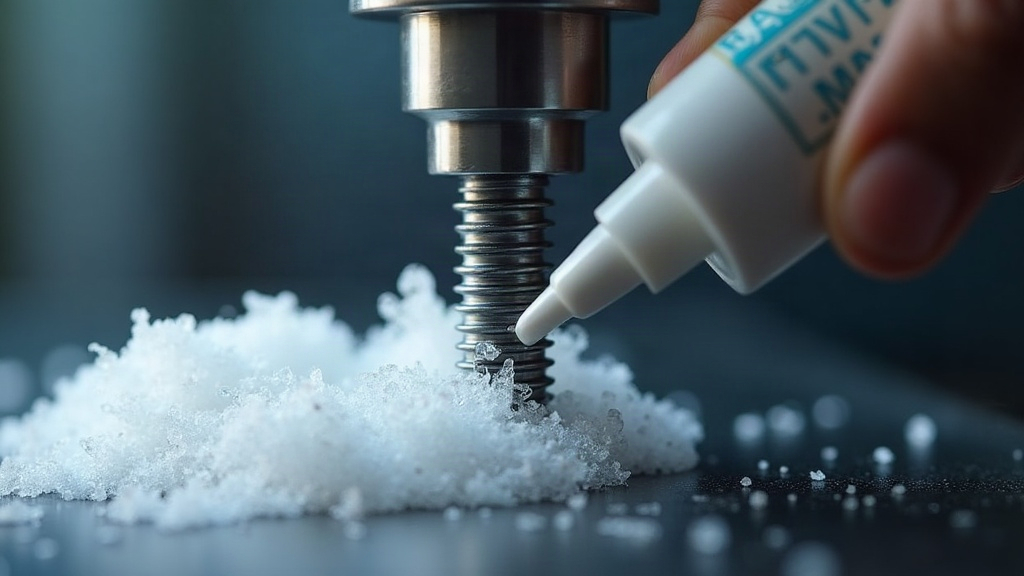
Keeping your 3D printer running smoothly takes regular upkeep, and few parts matter as much as the Z-axis lead screws. Ask around any maker forum about PTFE vs white lithium grease for Z-axis lead screws, and you’ll get a heated debate about which one actually lasts. Here’s the short version: white lithium grease can handle heavier, longer industrial loads, but for a desktop 3D printer, PTFE-based synthetic greases win by a mile. Why? PTFE doesn’t pull in dust and debris the way lithium grease does, so your Z-axis stays smooth for longer and you don’t end up fighting binding six weeks down the road—much like how proper FEP vat maintenance prevents print failures. Let’s get into the details.
Why Lubricate Your Z-Axis Lead Screws?
Your printer’s Z-axis works through a threaded metal rod (the lead screw) running through a nut, usually brass or POM/polyacetal plastic, that hoists the whole extruder gantry up and down. Skip the lubrication and you get friction, plain and simple. That friction shows up as a high-pitched squeal, worn threads over time, and the classic headache known as “Z-banding”: those ugly horizontal ridges on your prints caused by uneven or jerky vertical movement. A thin, proper layer of lubricant creates a microscopic film between the screw and nut, letting the stepper motor lift the gantry smoothly and consistently, print after print.
White Lithium Grease: The Heavy-Duty Classic
White lithium grease has been a go-to in garages and machine shops for decades. It’s thick, built for metal-on-metal contact, and shrugs off extreme pressure and heat without breaking a sweat.
- The Pros: It clings to whatever surface you put it on and won’t drip off. It shrugs off water, and it does a solid job fighting rust and corrosion.
- The Cons: Here’s the catch for 3D printing: that sticky texture is a dust magnet. Sitting out in the open on your desk or in a workshop, it grabs airborne dust, pet hair, loose filament bits, you name it. Give it a few months and that stuff mixes right into the grease, turning it into a gritty, dark sludge that can actually make friction worse and lock up your Z-axis instead of helping it.
PTFE (Teflon) Lubricants: The Slick Modern Choice
PTFE, or Polytetrafluoroethylene (you probably know it as Teflon), has one of the lowest friction coefficients around. For printer maintenance it typically shows up two ways: dry PTFE spray, or a synthetic grease with PTFE mixed in, Super Lube being the one most people reach for.
- The Pros: Movement feels smooth, almost slippery, in a good way. Neither the dry spray nor the synthetic grease pulls in airborne junk the way lithium grease does, so your lead screws stay clean and silvery instead of caked in grit.
- The Cons: Straight dry PTFE spray doesn’t stick around long. It wears off fairly fast and you’ll be reapplying it more than you’d like. The fix is simple though: a synthetic grease with PTFE particles suspended in it gives you that same low-friction feel but actually lasts, no constant reapplication needed.
Which Lasts Longer? The Final Verdict
So back to the real question: PTFE vs white lithium grease for Z-axis lead screws, which one holds up longer?
In a sealed, dust-free industrial setting, white lithium grease technically breaks down slower on a chemical level. Fair enough. But your printer isn’t sealed away in a clean room, it’s sitting out in your house or garage collecting dust the second you turn your back. That’s where lithium grease falls apart in practice. Once it turns into sludge from all the debris it’s grabbed, you’re stuck stripping the screws down, cleaning everything off, and starting over, way more often than you’d want to.
For real-world use, synthetic PTFE grease wins, no contest. It stays slick, keeps dust from sticking in the first place, and under normal desktop printing conditions you can often go 6 to 12 months between applications.
How to Apply Lubricant to Your Z-Axis
One rule above all: never slap new grease on top of old, dirty grease. All you’re doing is sealing the grit against your screw and making things worse.
- Clean thoroughly: Grab a lint-free microfiber cloth and some isopropyl alcohol (IPA), and wipe the lead screw down until every trace of old grease and debris is gone from the threads.
- Apply sparingly: A pea-sized dab of PTFE synthetic grease is plenty. Put it right in the middle of the threads.
- Distribute the grease: Using your printer’s control screen, run the Z-axis all the way up, then all the way back down. That motion drags the grease through the brass or POM nut and spreads it evenly across the threads.
- Wipe the excess: Grab a clean paper towel and wipe off any leftover globs that build up at the top and bottom of the screw’s travel. You’re aiming for a thin, almost invisible film, not visible clumps sitting on the metal.
Conclusion
Get the lubricant choice right and you’ll dodge a lot of headaches: weird print defects, squeaky Z-motion, screws wearing out before their time. White lithium grease is a great product, no argument there, but on an open printer frame it just picks up too much junk to be practical. Go with a good PTFE-based synthetic grease instead, and you’ll get clean, quiet Z-axis movement and prints without those annoying banding artifacts, for months at a stretch.