Food-Safe Epoxy Resin vs Bare PETG for 3D Printed Measuring Spoons
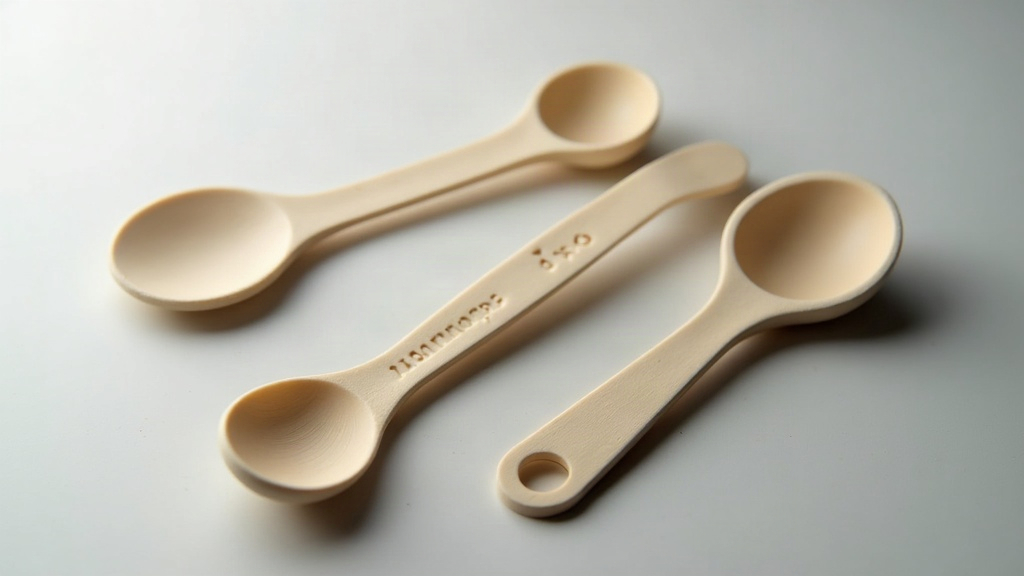
If you’re designing or buying 3D printed custom measuring spoons, the material matters more than the shape or the color you picked. The two go-to approaches are coating a print with food-safe epoxy resin or just printing straight in bare PETG filament. Epoxy gives you a smooth, sealed, dishwasher-resistant surface, but it costs more and adds curing steps. Bare PETG is simpler and genuinely food-contact-safe in its raw form, as long as you print it correctly. Here’s a real breakdown of the differences so you can pick with confidence.
Why Material Choice Matters for Measuring Spoons
Measuring spoons get into wet ingredients, acidic liquids, oils, sometimes hot batter. Unlike a decorative figurine sitting on a shelf, they actually need to survive:
- Repeated washing, whether by hand or in the dishwasher
- Contact with flour, sugar, lemon juice, cooking oils
- Microscopic layer lines that can trap bacteria if left unsealed
- Daily handling, and the occasional drop on the floor
Pick the wrong material and you’re not just looking at faster wear and tear. You’re looking at an actual food safety risk.
Bare PETG: The Simpler Option
PETG (Polyethylene Terephthalate Glycol) is a go-to for food-safe prints because the raw polymer itself is FDA-approved for food contact. It’s literally the same material used in a lot of disposable water bottles and deli containers you’ve probably handled this week.
Pros:
- Zero post-processing needed
- Naturally resistant to moisture, oils, and mild acids
- No risk of a coating peeling, failing, or leaching chemicals from improperly cured resin
- Theoretically easier to clean since there’s one less layer sitting between you and bacteria
Cons:
- Layer lines from printing leave microscopic grooves where bacteria and food particles can hide
- Surface isn’t truly sealed unless you print at a high quality, with layer heights of 0.1mm or finer
- Not dishwasher-safe over the long run. PETG starts warping above roughly 70-75°C, and most dishwashers run hotter than that
- Needs careful hand-washing to actually stay hygienic
Food-Safe Epoxy Resin Coatings: The Sealed Approach
Coat a PETG or PLA print with a certified food-safe epoxy and you get a smooth, glass-like finish that closes off every layer line.
Pros:
- Shuts down those porous layer lines, so sanitizing is easier
- Glossy finish looks noticeably more polished and professional
- Adds a thin barrier against staining (think turmeric, beet juice, tomato sauce, all the usual kitchen culprits)
- Boosts scratch resistance when cured properly
Cons:
- You need resin that’s explicitly certified food-safe, and most epoxies are not, no matter what the marketing says
- Get the ratio wrong or under-cure it, and leftover uncured chemicals can leach straight into your food
- Not heat-resistant. Most epoxies start softening or degrading somewhere around 60-65°C
- The coating can chip or crack with time, exposing the raw print underneath
- Extra labor across the board: sanding, cleaning, mixing, curing, and waiting, often 24 to 72 hours before it’s usable
Which One Should You Choose?
Choose bare PETG if:
- You want something low-maintenance and straightforward
- You’re printing with a fine nozzle (0.2mm or smaller) and thin layer heights
- You hand-wash dishes instead of relying on a dishwasher
- You’d rather skip any risk of a botched resin cure
Choose epoxy-coated prints if:
- You’re making spoons to sell or gift, and want that premium, sealed look
- You’re using a verified food-safe, FDA-compliant epoxy (check the technical data sheet, not the sales page)
- You can commit to the correct mixing ratio and full curing time
- Looks and stain resistance matter more to you than dishwasher durability
A Note on Safety Claims
Plenty of sellers slap “food safe” on a resin bottle with zero certification behind it. Always check for compliance with FDA 21 CFR 175.300 or EU 10/2011 food contact regulations. No mention of either on the product page? Assume it hasn’t been verified for direct food contact, cured or not.
Practical Tip: Test Before You Trust
Whatever you end up choosing, run this quick test first:
- Fill the spoon with a vinegar-water mix and leave it for 24 hours.
- Check for discoloration, odor, or any softening.
- Hold it under bright light and inspect for pitting or layer separation.
Passes all three? It’s probably fine for everyday kitchen use.
Conclusion
For most home makers, bare PETG printed with fine layers is the simpler, lower-risk pick for custom measuring spoons. It’s food-contact-safe on its own, with no secondary coating to worry about. Epoxy resin can dress things up and seal off porous surfaces, but only when you’re using a genuinely certified food-safe product cured the right way. When safety isn’t up for debate, simplicity tends to win out: a well-printed PETG spoon will beat a poorly cured epoxy coating every single time.