Carbon Fiber PETG vs Polycarbonate for FPV Prop Guards
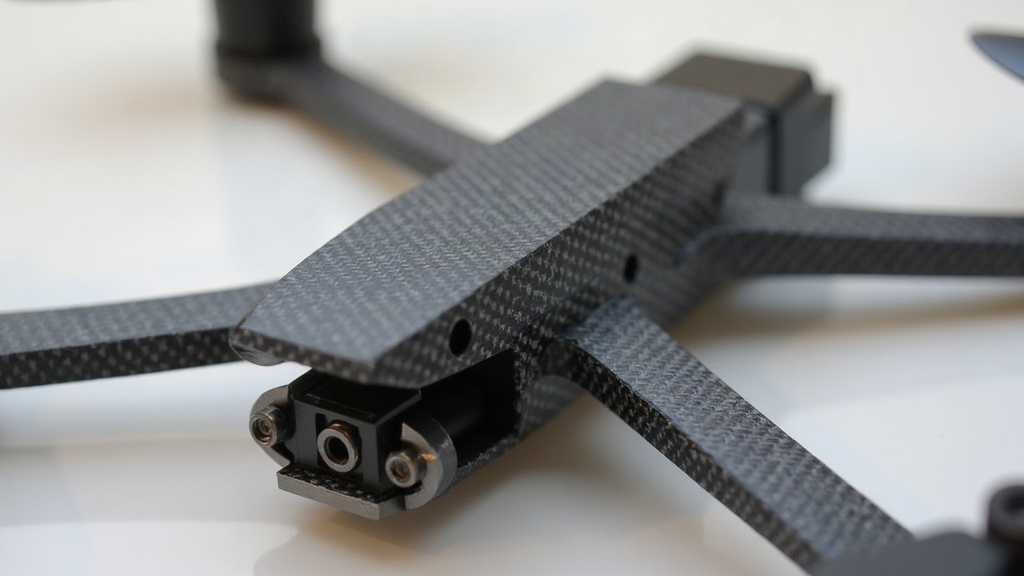
Choosing between carbon fiber PETG and standard polycarbonate (PC) for FPV racing drone propeller guards really comes down to one trade-off: stiffness and light weight versus flexibility and impact toughness. Carbon fiber PETG prints lighter, stiffer guards that hold their shape nicely but can crack on a hard hit. Polycarbonate flexes and soaks up impacts without shattering, though you pay for that with extra weight and a trickier print job. Here’s a closer look at both, so you can figure out which one actually fits your build.
Why Prop Guards Matter in FPV Racing
Propeller guards protect your props (and nearby fingers, pets, and furniture) during low-altitude freestyle flying, indoor racing, and tight gate work. A good guard needs to:
- Survive repeated crashes into walls, gates, and the ground
- Stay lightweight enough not to kill flight time or agility
- Resist warping from motor heat and vibration
- Keep its shape after multiple impacts (no permanent bending)
Material choice decides how a guard reacts in a crash. One cracks, one bends. That’s really the whole story, and it’s where carbon fiber PETG and polycarbonate pull apart.
Carbon Fiber PETG: Stiff, Light, and Precise
Carbon fiber (CF) PETG is just standard PETG with chopped carbon fiber strands mixed in, usually 10-20% by weight.
Strengths:
- Higher stiffness-to-weight ratio. Guards hold tighter tolerances and won’t sag or warp from prop wash or heat coming off the motors.
- Lighter than PC. On a 3-5 inch racing quad, every gram shows up in acceleration and flip speed, so this matters more than it sounds.
- Easier to print. Lower temps (around 230-250°C), less warping, no enclosure strictly required (though it helps), and solid first-layer adhesion.
- Smooth surface finish, with the carbon fiber giving it a matte, technical look that honestly just looks the part on a race quad.
Weaknesses:
- Brittle under sharp impact. The carbon strands create tiny stress points, so a guard that handles normal flex fine can snap clean on a direct hit, especially at thin walls or sharp corners.
- Abrasive to print. It chews through brass nozzles fast, so you need hardened steel or ruby.
- Weaker long-term fatigue and UV resistance than PC if it’s living outdoors.
Standard Polycarbonate: Tough and Forgiving
Polycarbonate gets used in bulletproof glass and motorcycle helmet visors for a reason: its impact resistance is in a different league.
Strengths:
- Outstanding impact toughness. PC absorbs energy by flexing and deforming instead of cracking, which is exactly what you want on a guard that’s going to take repeated, unpredictable hits.
- High heat deflection temperature (roughly 110-140°C), so it won’t soften up next to warm motors or sitting in a hot car on a summer afternoon.
- Excellent long-term durability. It shrugs off fatigue cracking over hundreds of crash cycles better than the carbon-loaded composites.
Weaknesses:
- Heavier than carbon fiber PETG, and that extra mass matters more on smaller, weight-sensitive builds.
- Harder to print well. You need higher nozzle temps (260-280°C), a heated bed at 100°C or more, and ideally an enclosure, or you’ll fight warping and layer delamination the whole way through.
- More prone to warping mid-print if cooling isn’t dialed in carefully.
Head-to-Head Comparison
| Factor | Carbon Fiber PETG | Polycarbonate |
|---|---|---|
| Weight | Lighter | Heavier |
| Stiffness | Higher | Lower (more flex) |
| Impact resistance | Moderate, brittle on hard hits | Excellent, absorbs shock |
| Print difficulty | Easier | Harder (needs enclosure) |
| Heat resistance | Good | Better |
| Nozzle wear | High (abrasive) | Low |
| Best for | Racing/freestyle, precision parts | Crash-heavy flying, beginners |
Which Should You Choose?
- Go with carbon fiber PETG if you’re flying tight freestyle lines, racing competitively, and want the lightest, stiffest guard that holds its geometry under vibration, and you don’t mind printing a new one after the occasional bad crash.
- Go with polycarbonate if you’re still learning, flying indoors near furniture and walls, or clipping gates on a regular basis. The extra weight is a fair price for durability; PC guards can take dozens of hard hits without cracking.
A lot of experienced pilots just keep both on hand and swap depending on the session: CF PETG for clean racing laps, PC for messy freestyle or indoor practice where things are going to get banged up.
Printing Tips for Both Materials
- Use a hardened nozzle (0.4mm steel or ruby) for CF PETG, or you’ll be replacing nozzles constantly.
- Print PC in a fully enclosed printer with slow first layers to keep warping under control.
- Add fillets instead of sharp corners on guard arms. This cuts down stress concentration no matter which material you’re using.
- Bump up wall count to 4+ perimeters on the high-stress sections of the guard, for both materials.
Conclusion
There’s no single “best” material here, it depends on how you fly. Carbon fiber PETG gives you a lighter, stiffer guard that suits competitive racing and clean freestyle. Polycarbonate gives up a bit of weight for crash resilience that’s hard to beat, which makes it the safer pick for beginners and anything flown around obstacles. Not sure which way to go? Start with PC for the forgiving toughness, then switch to CF PETG once you’ve got a feel for your flying style and how often you’re actually crashing.